
Introduction
Back pain, neck stiffness, and shoulder tension are so common among Singapore’s working population that many people have simply accepted them as a normal part of life. They are not. These are symptoms of a deeper structural problem that builds silently over years of sitting at a desk, staring at a screen, and commuting in cramped positions. And unlike most medical complaints, this one has a highly effective, non-pharmaceutical solution.
Engaging a qualified personal gym trainer Singapore who specialises in corrective exercise and postural rehabilitation is one of the most impactful things a desk-bound professional can do for their long-term health. This is not about aesthetics or standing up straight when someone is watching. It is about restoring the structural integrity of your body before years of dysfunction cause permanent damage.
What Poor Posture Actually Does to the Body Over Time
Most people think of poor posture as a cosmetic issue, a rounded back or a forward-jutting chin. But the physical consequences go far deeper than appearance. Chronic postural dysfunction creates a cascade of compensations throughout the entire musculoskeletal system that affect breathing, digestion, circulation, and even mood.
Forward head posture, where the head sits in front of the shoulders rather than balanced above them, adds significant compressive load to the cervical spine. For every 2.5 centimetres the head moves forward, the effective weight on the neck roughly doubles. A head that weighs approximately 5 kilograms in a neutral position can exert the equivalent of 20 to 25 kilograms of force on the neck when held in a forward position for extended periods.
Upper cross syndrome describes a pattern where the muscles at the front of the chest and the back of the neck become chronically tight and overactive, while the muscles of the upper back and deep neck flexors become weak and inhibited. The result is rounded shoulders, a hunched upper back, and persistent neck tension. Lower cross syndrome describes the equivalent pattern at the hips and lower back, where tight hip flexors and a weak core and glutes create anterior pelvic tilt and chronic lower back pain.
The Most Common Postural Issues Seen in Singapore Office Workers
Rounded shoulders are the most visually obvious manifestation of desk-related postural dysfunction. They develop from hours of reaching forward towards a keyboard and screen, which shortens the pectoral muscles and stretches the rhomboids and mid-trapezius to the point where they can no longer hold the shoulders in their correct position.
Anterior pelvic tilt, where the pelvis tips forward and the lower back arches excessively, is caused primarily by tight hip flexors from prolonged sitting combined with weak glutes and abdominals. It is an extremely common finding in Singaporean office workers who sit for 8 to 10 hours a day and do little or no hip extension work in their exercise routines.
Thoracic kyphosis, an excessive rounding of the mid-back, is the structural adaptation the spine makes to compensate for rounded shoulders and forward head posture over time. Once this becomes a structural rather than just a postural habit, it requires more intensive corrective work to address.
How a Personal Trainer in Singapore Assesses Posture
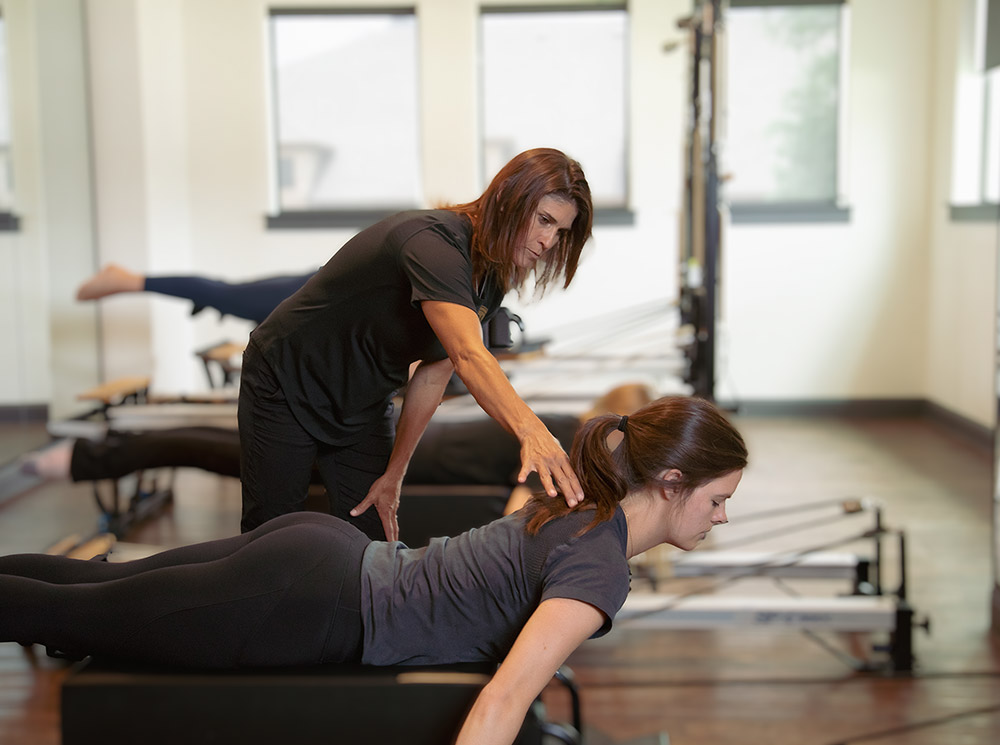
Before any corrective programme begins, a thorough postural and movement assessment is essential. At TFX, trainers trained in corrective exercise protocols evaluate static posture by observing alignment from the front, side, and back. They assess the position of the head, shoulders, ribcage, pelvis, and feet, noting deviations from optimal alignment at each point.
Movement assessments follow, where the trainer observes functional patterns such as the squat, the overhead reach, the single-leg stance, and the hip hinge. These movements reveal how postural dysfunction translates into compromised movement quality, which is where injury risk lives. A client who has an anterior pelvic tilt will almost always compensate in their squat pattern in ways that place excessive load on the lumbar spine unless it is identified and addressed.
Corrective Exercise Programming Explained
Corrective exercise follows a logical three-phase structure. The first phase involves inhibiting and lengthening overactive, tight muscles. This is done through targeted foam rolling and myofascial release techniques to reduce tension in the affected tissues, followed by specific stretching to restore length. For someone with rounded shoulders, this means releasing the pectorals, the lats, and the levator scapulae.
The second phase activates and strengthens the underactive, inhibited muscles that have been switched off by years of compensation. For the same client, this means targeted activation work for the mid and lower trapezius, the serratus anterior, and the deep cervical flexors. These muscles need to be specifically isolated before they can be effectively recruited in compound movements.
The third phase integrates these corrections into functional movement patterns. A client who has spent weeks releasing their chest and activating their upper back can now perform a rowing movement with correct scapular mechanics, or an overhead press with proper thoracic extension, rather than defaulting to their old dysfunctional pattern.
TFX trainers such as Ellie, who specialises in corrective exercise and myofascial release, and Khriscia, who focuses on sports rehabilitation and posture correction, bring specific expertise to this process that goes well beyond what a general fitness trainer can offer.
Restoration Conditioning as a Recovery Tool
TFX’s Restoration Conditioning quadrant is especially relevant to postural correction work. This pillar of the 4-Quadrant Fitness Programme is designed to improve short and long-term recovery, enhance sleep quality, restore mobility and flexibility, and support fascial health and movement ability. These are precisely the adaptations needed to reverse the chronic tightness and immobility that drive postural dysfunction.
Restoration work is not passive. It includes structured mobility drills, breathing pattern retraining, fascial release techniques, and movement quality exercises that address the neuromuscular patterning underlying poor posture. A trainer who integrates restoration conditioning into a postural correction programme understands that the nervous system needs to be retrained, not just the muscles.
Exercises That Help Versus Exercises That Hurt Posture
One of the most important roles a personal trainer plays in posture correction is preventing clients from reinforcing their dysfunction through inappropriate exercise selection. Many popular exercises, when performed by someone with significant postural imbalances, will worsen rather than improve those imbalances.
Bench pressing with rounded shoulders and a forward head position drives the already overactive pectoral muscles harder while leaving the already weak upper back muscles further behind. Overhead pressing with anterior pelvic tilt and limited thoracic mobility transfers load to the lumbar spine rather than the shoulder girdle. Sit-ups and crunches reinforce hip flexor dominance in someone who already has a shortened psoas.
A trainer with corrective exercise knowledge will modify or temporarily replace these exercises with alternatives that build the correct movement patterns before loading them. Pull variations replace pressing in the early phases. Hip hinge work replaces sit-ups. Single-leg work exposes and addresses lateral imbalances that bilateral exercises mask.
How Long Before You See and Feel Results
Mild postural imbalances, those present for a year or two, typically respond well within 4 to 6 weeks of consistent corrective training. Clients often report a reduction in neck and shoulder tension within the first 2 to 3 weeks simply from the release and activation work.
More entrenched patterns, particularly structural adaptations like thoracic kyphosis present for a decade or more, require 3 to 6 months of consistent work before meaningful structural change occurs. Progress is nonetheless felt before it is fully visible. Reduced pain, improved breathing capacity, and a greater sense of ease in everyday movement are often the first signs that the programme is working.
Frequently Asked Questions
Can personal training fix my lower back pain caused by desk work? In many cases, yes. The majority of non-specific lower back pain in sedentary individuals is driven by muscular imbalances and dysfunctional movement patterns that a skilled corrective exercise trainer can address. However, if structural pathology such as disc herniation or spinal stenosis is involved, a physiotherapist or orthopaedic specialist should be involved alongside your trainer.
How is posture correction at a gym different from physiotherapy? Physiotherapy typically focuses on rehabilitating a specific injury or condition to a functional baseline. Corrective exercise training at a gym builds on that baseline by systematically addressing the movement and strength imbalances that caused the problem in the first place, and by integrating corrections into a full fitness programme so results are maintained long-term.
Will corrective exercises affect the rest of my fitness training? They will initially require some modifications to your programme. Certain exercises will be temporarily replaced or regressed. But within a few weeks, the corrections improve your movement quality across the board, which means you can load exercises more safely and effectively than before.
How do I know if I have a postural issue worth addressing? If you experience persistent neck, shoulder, or lower back discomfort, notice asymmetry in your shoulders or hips when you look in the mirror, or find that certain exercises consistently cause joint pain, these are strong indicators that postural dysfunction is present. A movement assessment with a qualified trainer will confirm the findings.
Does TFX offer trainers who specialise in corrective exercise and rehabilitation? Yes. TFX Singapore has several trainers with specific specialisations in rehabilitative and corrective exercise, sports rehabilitation, posture correction, and myofascial release across its Funan, Millenia Walk, and CIMB Plaza locations.