
A decade ago, kombucha was a curiosity found mostly in health food stores and the occasional inner-city café. Today it’s stocked in mainstream supermarkets, brewed on tap in bars, and fermenting away in kitchens across the country. Kombucha’s rise in Australia says something about a broader shift toward foods that are minimally processed and rich in live cultures, but for anyone new to it, the basics of what it is and how it’s made are still worth understanding properly before diving in.
This guide covers what kombucha actually is, why it’s fermented the way it is, and what to know whether you’re buying it from the shops or brewing your own at home.
What Kombucha Actually Is
Kombucha starts as sweetened black or green tea, fermented with a SCOBY, a symbiotic culture of bacteria and yeast that floats on the surface of the liquid as a rubbery, pancake-like disc. Over the course of fermentation, the yeast consumes the sugar, producing alcohol and carbon dioxide, while the bacteria then convert that alcohol into organic acids, primarily acetic acid, giving kombucha its characteristic tang.
The result is a mildly effervescent, tart drink with a small residual amount of sugar, live bacterial and yeast cultures, and trace amounts of alcohol, typically well under 0.5% in commercially sold kombucha, though home-brewed kombucha batches can occasionally run slightly higher depending on fermentation length and conditions.
Why Kombucha Australia Sales Keep Climbing
Kombucha Australia sales have grown substantially over the past several years, part of a broader consumer shift toward drinks perceived as functional rather than purely indulgent. Kombucha occupies an interesting middle ground, it has the fizz and flavour variety of a soft drink, but with a fraction of the sugar and none of the artificial additives found in many mainstream soft drink options.
The rise of flavoured, bottled kombucha in mainstream retail has also lowered the barrier to entry considerably. Where trying kombucha once meant seeking out a specialty health store, it’s now sitting in the fridge section of most major supermarkets, making it an easy trial purchase for the curious.
Getting Started with a Kombucha SCOBY
For those wanting to brew rather than buy, everything starts with a healthy kombucha SCOBY. A SCOBY can be purchased directly, grown from a small amount of unpasteurised, unflavoured kombucha (a slower and less reliable method), or received as an offshoot from someone already brewing.
The basic process involves brewing sweetened black or green tea, cooling it fully to room temperature, then adding the SCOBY along with a portion of already-fermented kombucha (known as the “starter liquid”) to establish the right acidity from the outset. From there, the mixture ferments at room temperature, covered with a breathable cloth, for anywhere between seven and twenty-one days depending on temperature and personal taste preference.
A healthy SCOBY should look pale, cream, or light tan, with a relatively smooth or slightly bumpy texture. Dark spots, fuzzy mould growth, or an unpleasant smell (rather than the expected vinegary tang) are signs the culture has been compromised and shouldn’t be used.
Kombucha Kits: A Simpler Entry Point
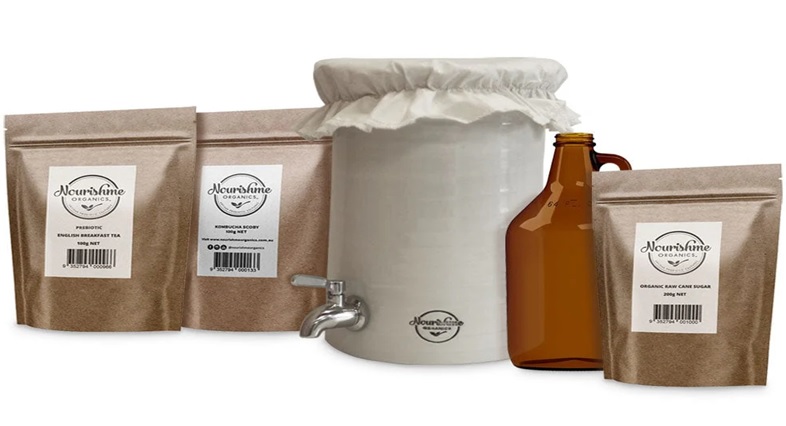
For anyone unsure about assembling equipment piece by piece, kombucha kits offer a more straightforward starting point, typically bundling a SCOBY, starter liquid, brewing vessel, and sometimes tea and sugar in one package. This removes much of the early guesswork around sourcing individual components and gives new brewers a tested, complete setup to work from for their first few batches.
Once the basics are down, most home brewers eventually move away from kits toward sourcing their own tea, sugar, and vessels, largely because ongoing costs drop considerably once you’re maintaining an established SCOBY rather than starting from scratch each time.
Second Fermentation: Where the Flavour Fun Happens
The initial fermentation produces a fairly plain, tart base kombucha. Most of the flavour variety associated with kombucha actually comes from a second fermentation step, where the finished first-ferment kombucha is bottled with added fruit, ginger, herbs, or spices and left to ferment for a further two to five days in a sealed bottle.
This second stage does double duty: it builds natural carbonation as the remaining yeast consumes the added sugars in a sealed environment, and it infuses whatever flavour additions have been included. Popular Australian variations include native finger lime, ginger and turmeric, and various native botanicals, alongside more classic options like berry and citrus blends.
Probiotics and Kombucha: Understanding the Connection
Kombucha’s popularity is closely tied to its live bacterial and yeast content, often discussed alongside probiotics more broadly. It’s worth noting an important distinction, though: kombucha’s microbial makeup is naturally variable and depends heavily on the specific SCOBY, brewing conditions, and fermentation length, unlike a probiotic supplement, which typically specifies exact strains and colony-forming unit counts.
This doesn’t diminish kombucha’s appeal, but it does mean it’s better understood as a fermented food containing a variable community of live cultures rather than a precisely dosed probiotic product. For anyone specifically wanting defined strains for a targeted purpose, a dedicated probiotic supplement and a daily kombucha habit serve genuinely different roles, and many people find value in incorporating both rather than viewing them as interchangeable.
Organic Kombucha: Does It Matter?
Organic kombucha has become a common choice among regular drinkers, largely driven by concerns about pesticide residue in non-organic tea leaves and a general preference for minimally processed inputs. Since kombucha is essentially a concentrated extraction of whatever is in the tea and sugar used to brew it, sourcing organic tea can matter more here than it might for a cup of tea consumed on its own, simply because of the extended contact time during fermentation.
For home brewers, this is a straightforward substitution, organic loose leaf or bagged tea works identically to non-organic in the brewing process, with no changes needed to timing or technique.
Frequently Asked Questions
Does kombucha contain alcohol?
Yes, in small amounts. The fermentation process naturally produces trace alcohol as a byproduct of yeast activity, though commercially sold kombucha in Australia is generally kept under 0.5% alcohol by volume to remain classified as a non-alcoholic beverage. Home-brewed batches, particularly those left to ferment longer or through an extended second fermentation, can sometimes register slightly higher.
How much sugar is actually left in finished kombucha?
Most of the sugar used to brew kombucha is consumed by the yeast and bacteria during fermentation, though a portion remains in the finished product. Sugar content varies depending on fermentation length, shorter ferments retain more residual sugar and taste sweeter, while longer ferments taste more acidic with less sugar remaining.
Can kombucha go “off,” or is it self-preserving?
Kombucha’s acidity generally makes it inhospitable to harmful pathogens, which is part of why it’s traditionally considered a relatively safe home ferment. That said, visible mould (distinct from the SCOBY itself, or the harmless yeast strands that can form in the liquid) is a sign a batch should be discarded rather than consumed.
Is it safe to drink kombucha every day?
Most people tolerate daily kombucha consumption without issue, typically in servings of 100–250ml. Those with compromised immune systems, pregnant women, or people managing specific health conditions are often advised to check with a healthcare professional first, given the trace alcohol content and live bacterial cultures involved.
Storing and Enjoying Kombucha Safely
Home made kombucha should be refrigerated to slow further fermentation once it’s reached a flavour you’re happy with, without cold storage, the yeast and bacteria continue working, gradually increasing acidity and, in sealed bottles, building pressure that can occasionally lead to over-carbonation. Opening bottles slowly and over a sink, particularly after a longer second fermentation, avoids unwanted fizzy surprises.
Kombucha’s rise across Australia reflects a genuine shift in how people think about fermented, minimally processed foods, not just a passing trend. Whether you’re picking up a bottle from the fridge aisle or nurturing your own SCOBY through its first few batches, understanding the fermentation process behind it makes for a far more satisfying (and successful) kombucha habit.